Al Pastor, Adobada and Shawarma: One Family Tree
Al pastor is Mexico's adaptation of shawarma, brought by Lebanese immigrants to central Mexico in the early 20th century. The vertical spit stayed; the lamb became pork, the spice paste became a chile-and-achiote adobo, and a slice of pineapple went on top. Adobada is the drier, redder northern Mexican and border version cooked the same way. All three are defined by the trompo, the rotating vertical spit.
From Beirut to Puebla
Lebanese migrants settled in Mexico, particularly Puebla and Mexico City, from the late 1800s onward. They brought shawarma, spiced lamb stacked on a vertical spit and shaved off as the outside cooks. In Mexico this first appeared as tacos arabes, still served today in Puebla on a pita-like flatbread with a lighter marinade.
Over the following decades, cooks swapped lamb for pork, which was cheaper and more widely eaten, and rebuilt the marinade around dried guajillo and ancho chiles, achiote (annatto), vinegar, and spices. The pita became a corn tortilla. Someone, somewhere in Mexico City, started adding pineapple. By the 1960s al pastor was its own thing.
Al pastor taco guide · Al pastor near you
What the trompo does
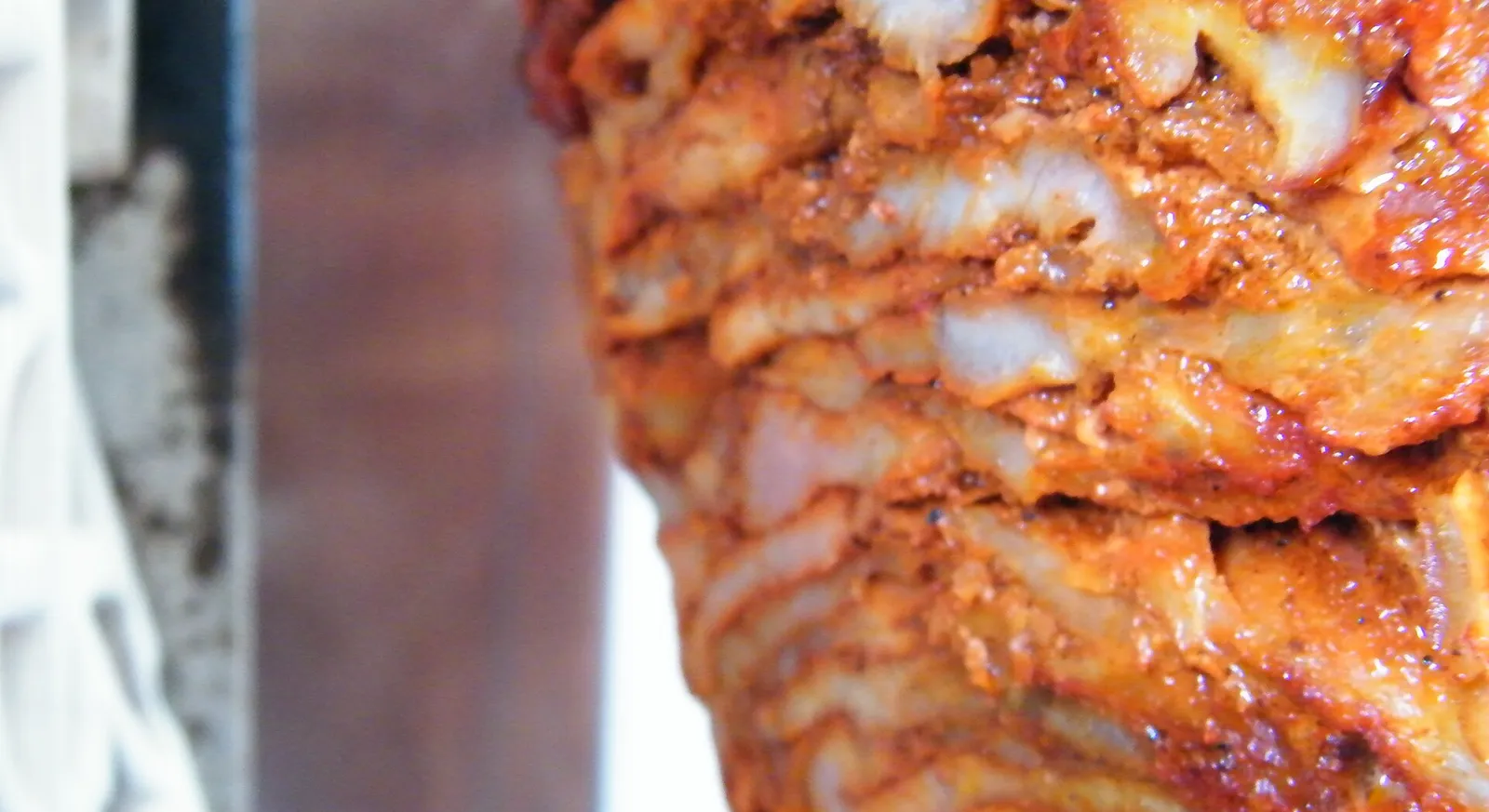
Thin slices of marinated pork are packed onto a vertical spit, sometimes a foot or two tall, with a top layer of onion and often a pineapple. A flame behind or beside it cooks the outer surface. The taquero shaves off the crisp exterior to order, which means every taco has both caramelized edges and juicy interior.
This is why al pastor from a pan is a different, lesser dish. Without the trompo you lose the render, the crust, and the show. A real al pastor spot has a visible, working trompo, usually busiest in the evening once it has built up a crust all day.
Al pastor vs adobada
The line is blurry and regional, but generally: al pastor (central Mexico, Mexico City style) is redder from achiote, a little sweet, often finished with pineapple. Adobada (northern Mexico, Tijuana, and the US border, including Los Angeles spots run by Tijuana families) tends to be drier, deeper red, more chile-forward, and less sweet, sometimes with no pineapple at all.
Los Tacos No. 1 in New York, run by founders from Tijuana and Ensenada, calls its trompo pork adobada. King Taco in Los Angeles calls a similar thing al pastor. Both are excellent; the naming follows where the cooks are from.
Al pastor vs adobada, side by side
How to order
- Ask for it con pina (with pineapple) and con todo (onion, cilantro, lime).
- Go in the evening when the trompo is at its best.
- Salsa verde and a squeeze of lime is the classic finish; a smoky salsa roja also works.
- If a place calls it al pastor but there is no spit in sight, order something else.
Find Al Pastor Tacos near you →
FAQ
Is al pastor always pork?
Almost always. The word pastor means shepherd, a nod to the lamb origins, but the Mexican dish is pork. A few places do a chicken or beef version and label it clearly.
Why pineapple?
It adds acidity and sweetness that cut the fat, and its enzymes lightly tenderize the surface of the meat. It is not universal, especially in northern adobada, but in Mexico City style it is standard.
What are tacos arabes?
The direct ancestor still served in Puebla: spit-roasted pork with a simpler marinade, folded into a thick wheat flatbread rather than a corn tortilla, usually with a chipotle-based sauce.
Published July 20, 2026, updated August 31, 2026. By Niam Hocaine.